


|
|
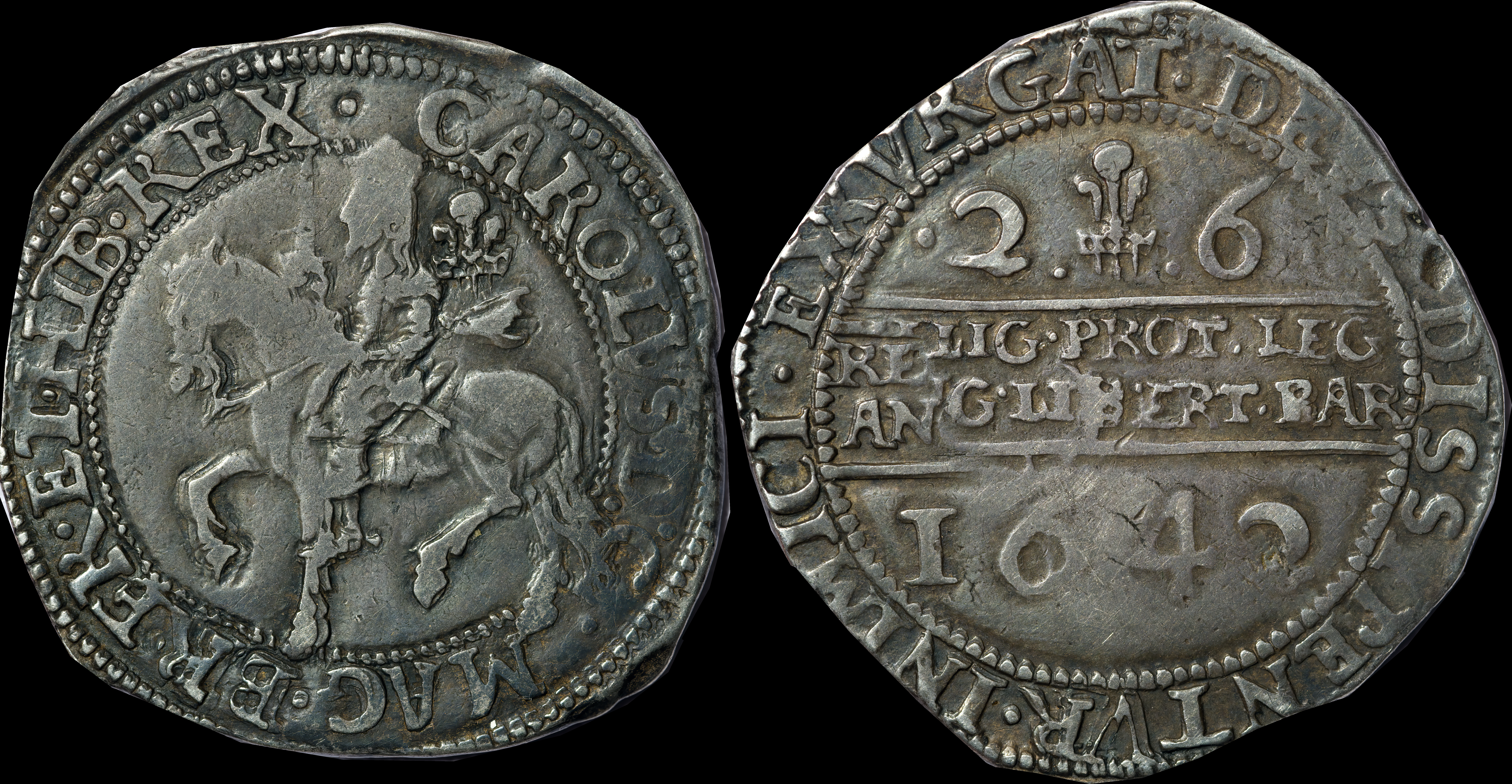
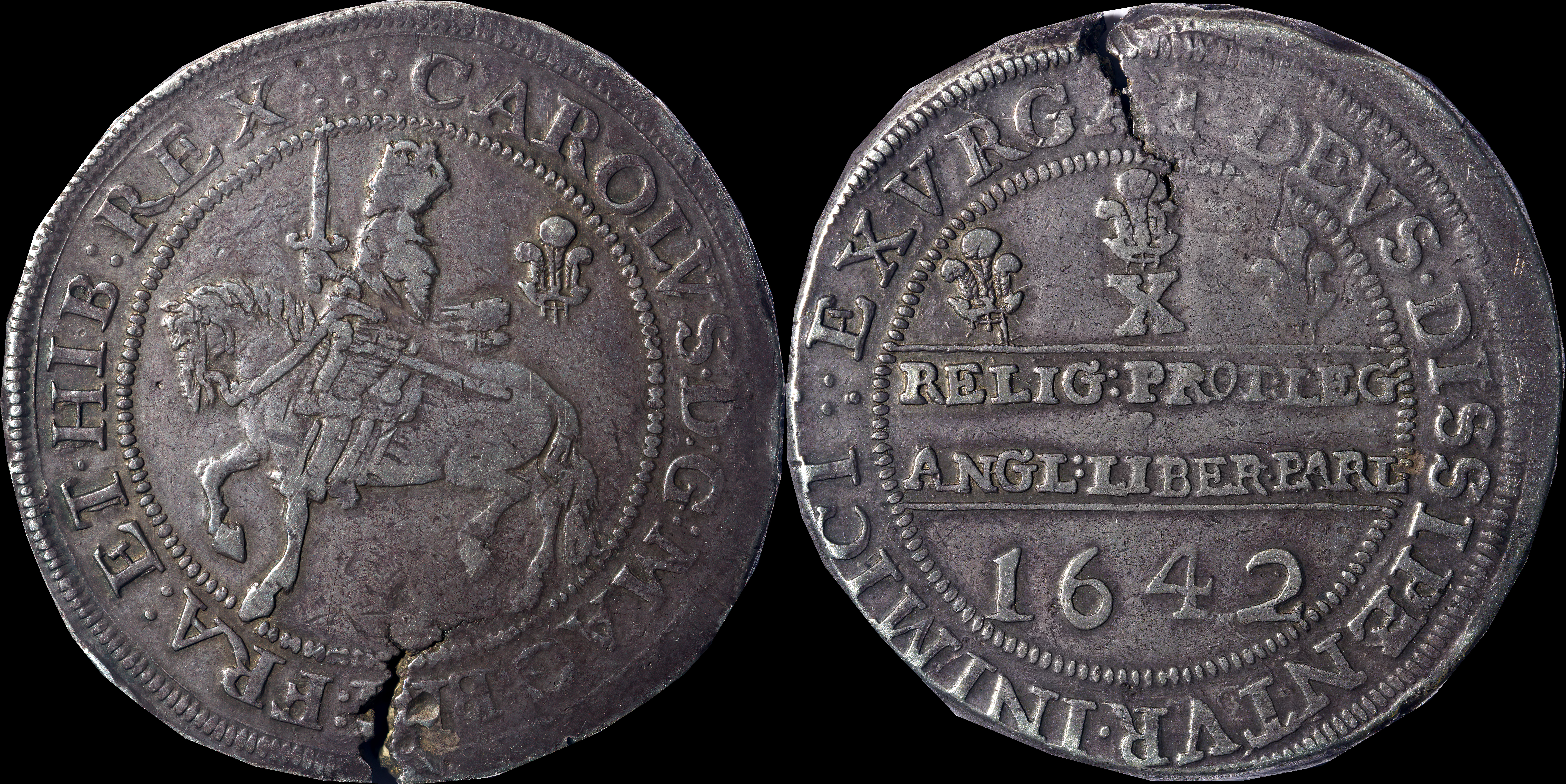
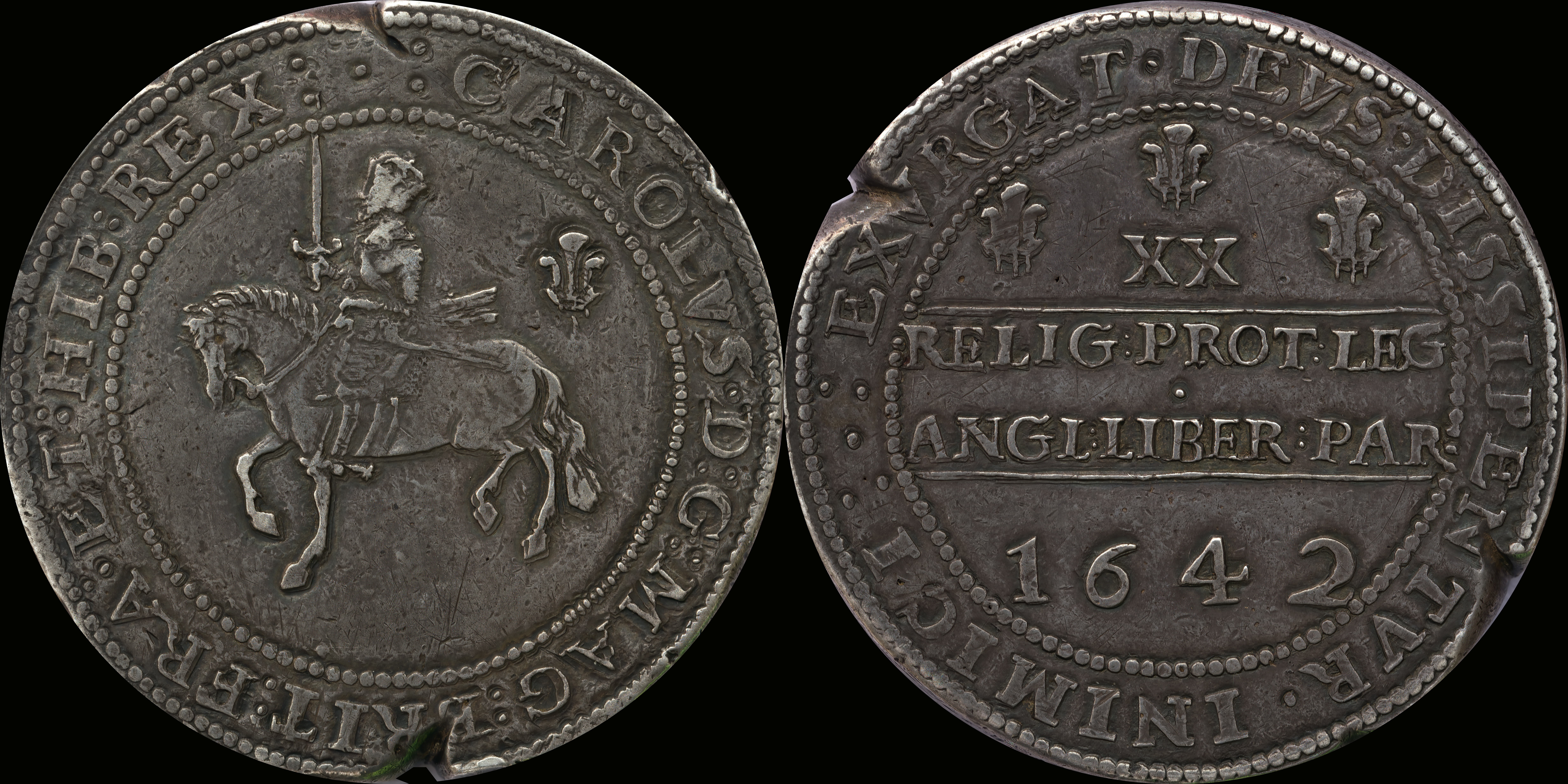
The mint at Shrewsbury was established with equipment and silver from the Aberystwyth mint, with the first coins issued on October 21, 1642. Minting continued until the end of December 1642 when the equipment was moved to Oxford, the new Royalist capital. Issues include a gold Triple Unite (considered a pattern), Pounds and Half-pounds (rare), Crowns (rare to scarce), Halfcrowns (the most numerous but still rare), and Shillings (extremely rare).
|
Shrewsbury horseman, Shrewsbury plume in field behind, no ground line below. 2 plume 6 above Declaration. |
| Bull 585/3a, Morrieson C-3, Brooker 817, N 3930, S 2930. Spink plate coin. Ex Archbishop of York Dr. John Sharp (1645–1714, Archbishop 1691-1714 under William III/Mary II and Anne). 7 known with 3 in the British museum, and this one in the 2nd highest grade of the 7 (2025). | |
|
Horseman riding left. Declaration between two straight lines. |
| S 2920. | |
|
Horseman riding left. Declaration between two straight lines. |
| Morrieson A-4, Brooker 796, North 2361, S 2917. | |